The workshops worked. For about a week.
hen the inbox refilled, the pressure returned, and your best people went straight back to the patterns the training was meant to change. The content wasn't wrong. It just had nowhere to live.

The problem isn't your people. It's the system they operate in.
Most leadership and wellbeing programs treat performance as a knowledge gap — as if the right framework, delivered well, will change behaviour. But your leaders don't lack information. They're running on a system where demands have quietly, chronically outgrown the resources to meet them. Content delivered into that system gets absorbed and erased within days. This is not a wellness problem. It's a performance one — and it's the difference between a team that absorbs pressure and one that buckles under it.
The framework: the 3Rs
We work from a single operating model, grounded in the research on demands, resources, and burnout (Maslach, Schwartz, the Job Demands–Resources model). Every engagement runs the same three movements:
- Restore:
Rebuild depleted resources (physical, mental, emotional, and purpose-driven energy) that pressure has drawn down. - Recalibrate:
Re-read the demand structure itself. Not "cope better," but change what is actually generating the load. - Reinforce:
Make the change durable. Wire the new patterns into how the team operates so they hold after the sessions stop. This is the step that turns a good experience into a lasting one.
The 3Rs work at two levels — and that's where alignment actually comes from.


Two levels, one system
A leader is a system that burns out when demands outrun resources. So is a team. Running the 3Rs on only one of them doesn't hold — when a leader recalibrates but the team keeps running the old operating system, the change gets quietly absorbed back. Alignment is what happens when leader and team pull the same lever, in the same language.
- The leader (1:1): the anchor
The deepest recalibration happens with the individual carrying the most load. This work is the anchor for everything else.. - The team: where it holds
Small-group cohorts build the shared resources that keep the leader's recalibration from being reabsorbed. This is the work below.
The team curriculum
At the team level, the 3Rs are built through five capabilities. Each one develops a specific energy and maps onto a specific movement of the framework:
- The science of happiness:
Builds purpose and meaning as a renewable resource. (Restore + Reinforce) - Overcoming fear and stress:
Restores emotional energy and the capacity to operate under pressure rather than react to it. (Restore) - Building resilience, the pause:
Develops the space between stimulus and response, where better decisions live. (Restore → Reinforce) - Leading through complexity:
Equips teams to tell technical problems from adaptive ones and to recalibrate their response accordingly (after Heifetz). (Recalibrate + Reinforce) - Reinforcing change:
The integration work that makes the other four last, turning capability into default behaviour. (Reinforce)


A founding partnership
This is a new practice, and we're choosing a small number of founding partner organisations to build the evidence base with us. As a founding partner, your team goes through the full cohort program at founding-partner terms, in exchange for candid feedback and — where you're willing — a testimonial once you've seen the results.
This is a team offer. It's the fastest, lowest-cost way to put the 3Rs to work across a leadership group while the founding cohort is open through 2027.
Most change fades...
Because it has nowhere to live once the room empties. If you want it to outlast the session it started in, that's a different kind of conversation — and it's exactly the one a proposal meeting is for.
About Sheli
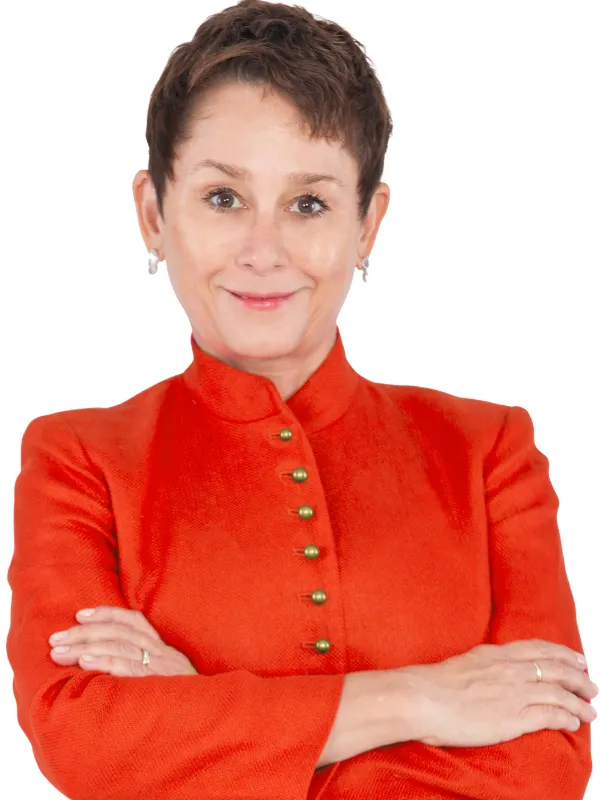
Thirty years in senior corporate roles — Creative Director, Brand Manager, and executive leadership across multinationals — sit behind this work. Sheli founded one of the early web development companies in 1996, served as CEO of a wellness venture, and is the author of two books on leadership. She holds an MBA, is a certified neuroscience coach, and completed HarvardX's Happiness in Leadership: Driving Team Success program — a three-course curriculum on happiness science, resilience, and adaptive leadership.
What she offers now is the deliberate combination of those two careers: the operational reality of leading teams under pressure, and the science of how people actually change.
Copyright © 2026 Brand Catalyst Limited. All rights reserved.